
• Home
  • Industries
    • Plastics Manufacturing
    • Specialty Metals Manufacturing
    • Chemicals Manufacturing
  • Solutions
    • Financial Management
    • Manufacturing
    • Supply Chain Management (SCM)
    • Naviona Products
  • Services
    • Project Management
    • Consulting
    • Development
    • Integrations
    • Support
    • Upgrades
    • Second Opinions
  • About Us
    • Partners
    • Blog Posts
    • Articles
  • Contact Us
Naviona | Business Central ERP solutions for SMB ManufacturersNaviona | Business Central ERP solutions for SMB Manufacturers
  • Home
  • Industries
    • Plastics Manufacturing
    • Specialty Metals Manufacturing
    • Chemicals Manufacturing
  • Solutions
    • Financial Management
    • Manufacturing
    • Supply Chain Management (SCM)
    • Naviona Products
  • Services
    • Project Management
    • Consulting
    • Development
    • Integrations
    • Support
    • Upgrades
    • Second Opinions
  • About Us
    • Partners
    • Blog Posts
    • Articles
  • Contact Us

Business Central for Specialty Metals Manufacturing

Connect alloy specifications, heat and lot traceability, ingredients, quality, reclaim, production, costing, inventory, and finance with Microsoft Dynamics 365 Business Central, COSMO CONSULT functionality, and Naviona’s alloy lot-balancing feature.

Naviona helps specialty metal manufacturers and alloy producers replace disconnected systems and spreadsheets with a connected platform designed around material identity, chemistry, quality, recovery, and mixed process and discrete manufacturing using Business Central for Specialty Metals Manufacturing.

Discuss your heat, lot, alloy, reclaim, quality, production, and costing requirements with a senior manufacturing consultant.

Contact Us

Specialty Metal Manufacturing Is Defined by Material Control

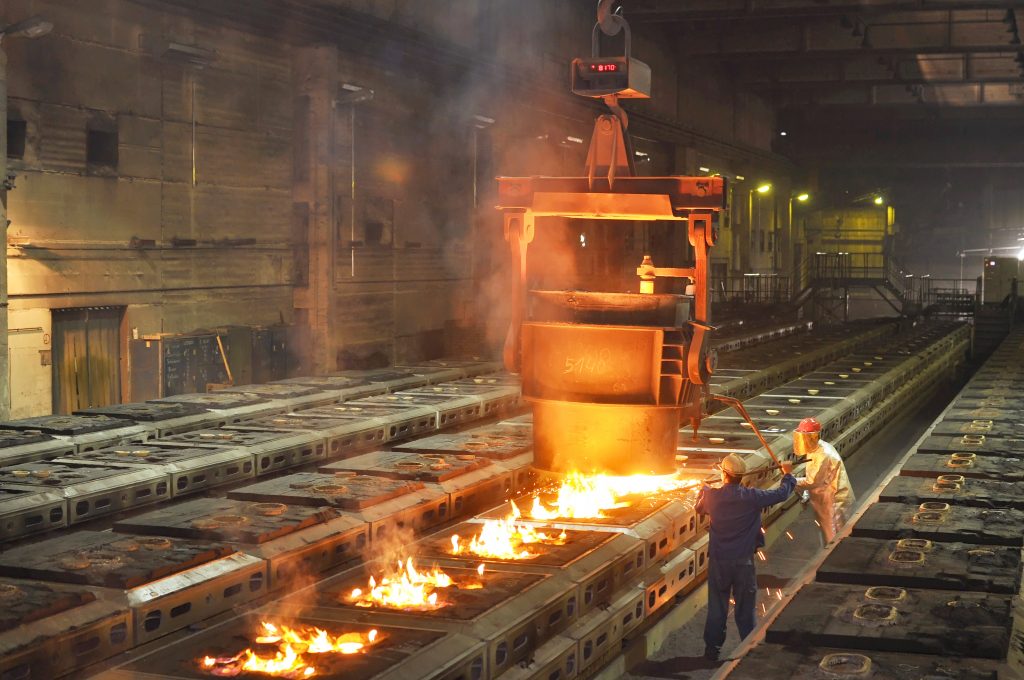
In specialty metals, the identity and characteristics of material matter at every step. Manufacturers must know what was received, its originating heat or lot, its chemical and physical properties, where it was stored, how it was consumed, what reclaim was added, what was produced, which tests were performed, and which customers received the finished material.

For alloy producers and foundries, that challenge becomes more complex when several source lots are combined into a melt and laboratory results determine what must be added before the batch can be released. The ERP platform must connect material genealogy, production, quality, inventory, costing, and customer documentation without losing the detail needed by operations.
What Specialty Metal Manufacturers Need From a Modern ERP System

Heat and Lot Traceability
Maintain material identity from receiving through production, processing, inventory movements, certification, and customer shipment.
Material Genealogy
Preserve the many-to-one and one-to-many relationships created when lots are combined, split, processed, reclaimed, or converted into new products.
Alloy and Grade Specifications
Define required chemical elements, composition ranges, physical properties, process requirements, and customer-specific specifications.
Laboratory and Quality Results
Record chemistry, hardness, tensile, dimensional, and other test results against heats, lots, operations, or finished products.
Melt and Charge Control
Plan the material charged into a furnace or batch, track actual consumption, and maintain the resulting heat identity.
Reclaim and Scrap Management
Recover, classify, store, value, trace, and reuse revert, returns, offcuts, remnants, turnings, or process scrap.
Yield and Recovery Visibility
Compare input weight with good output, reclaim, by-products, and loss across melting and downstream processes.
Weight and Multiple Units of Measure
Support purchasing, inventory, production, and sales where pieces, pounds, kilograms, feet, or other units are used together.
Quality Status and Disposition
Control material that is awaiting inspection, quarantined, released, downgraded, reworked, returned, or rejected.
Certificates and Material Documentation
Connect heat, lot, test, and shipment information to customer-facing certifications and supporting documents.
Production Planning
Coordinate furnaces, work centers, tools, outside processing, materials, capacity, setup, and customer priorities.
Costing and Metal Price Exposure
Understand material, conversion, overhead, outside processing, yield loss, recovery credits, and alloy-related pricing.
Alloy Surcharges
Calculate and document purchase or sales surcharges using alloy weights, quotations, conditions, and customer or vendor agreements.
Hybrid Manufacturing
Connect batch or process-oriented melting with discrete operations such as casting, cutting, rolling, drawing, machining, finishing, and packaging.
Inventory Accuracy
Maintain trusted on-hand quantities by item, location, heat, lot, quality status, dimensions, and other required characteristics.

Business Central for Specialty Metals and Alloy Manufacturing

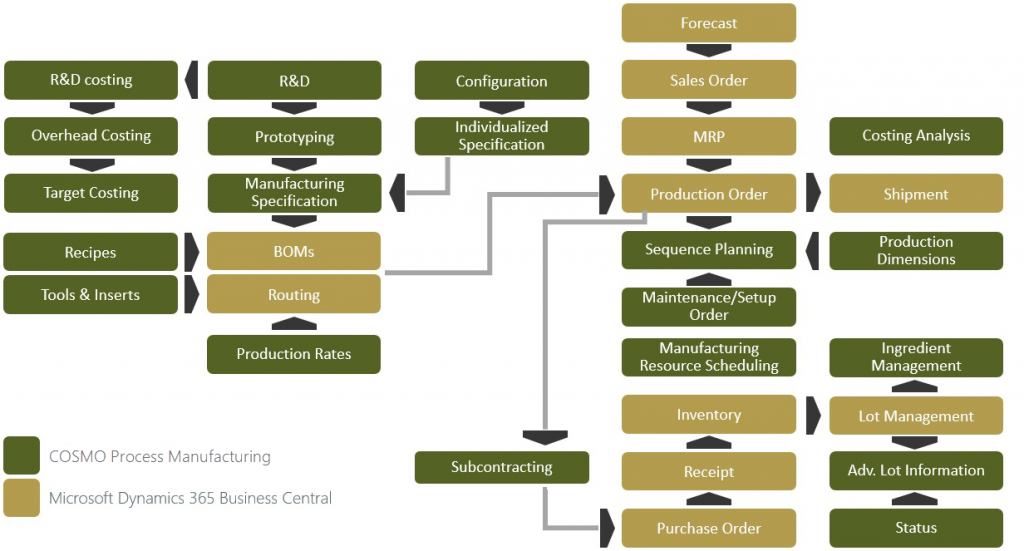
Microsoft Dynamics 365 Business Central provides the connected foundation for financial management, sales, purchasing, inventory, warehousing, manufacturing, planning, costing, reporting, and integration. COSMO Process Manufacturing and COSMO Quality Assurance extend that foundation for recipes, ingredients, combined production, lot-specific characteristics, inspection processes, quality-controlled inventory, and forward and reverse batch tracing.

COSMO Alloy Management can add alloy-surcharge calculation and billing. Naviona’s alloy functionality adds a metals-specific approach for balancing a planned alloy batch across selected source lots and laboratory chemistry.
Functionality Designed Around Specialty Metals Manufacturing

  • Heat & Lot Traceability
  • Alloy Composition Management
  • Naviona Alloy Lot Balancing
  • Chemical & Physical Testing
  • Quality-Assured Inventory
  • Reclaim, Revert & Scrap
  • Co-Products & Yield Management
  • Alloy Surcharge Management
  • Production Structures
  • Production Planning
  • Flexible Costing
  • Material Certifications
  • Inventory Genealogy
  • Multiple Units of Measure
  • Hybrid Manufacturing
Connect incoming heat and lot identities to inventory, production consumption, new melt or batch numbers, downstream processing, finished products, and customer shipments. Forward tracing shows where a source heat or lot was used. Reverse tracing identifies the material origins of a finished heat, lot, or shipment.

– Maintain external supplier lot or heat references alongside internal lot numbers.
– Preserve genealogy when multiple lots are consumed into one output lot.
– Preserve genealogy when one lot is split into multiple products or shipments.
– Use transaction history to support investigations, quality reviews, and certification processes.

Use recipe and ingredient structures to define the expected materials and relative proportions used to produce an alloy. Production structures can coordinate ingredients, process steps, routing information, instructions, quality inspections, resources, co-products, by-products, and costs in one manufacturing definition.
Naviona’s alloy lot-balancing functionality brings selected inventory lots and their recorded chemical analysis into the production decision, enabling the planned contribution of each chemical element to be evaluated across the proposed melt or batch.

– Select candidate raw-material, master-alloy, virgin-metal, and reclaim lots for the planned batch.
– Use lot-specific chemistry rather than assuming every available lot exactly matches a nominal item specification.
– Calculate the weighted chemical contribution of the selected quantities.
– Compare projected chemistry with target alloy composition and specification ranges.
– Adjust source-lot quantities and identify additions needed to achieve target chemistry.
– Carry selected lots into production consumption to preserve genealogy.
– Record the resulting heat or output lot for downstream testing, release, traceability, and certification.

COSMO Quality Assurance can define test plans and test properties for receiving, production, and finished-product inspections. Test properties can represent chemical elements and metallurgical characteristics with target values and allowable ranges.

– Record spectrometer or laboratory results against a heat or lot.
– Compare results against alloy specifications and test plans.
– Preserve test history alongside material and production transactions.
– Support release, rejection, rework, downgrade, and additional balancing decisions.

Control whether material can be consumed or shipped based on quality status. Lots can remain quarantined while inspection results are pending and then be released or rejected through defined quality processes.
Recoverable material can be managed as a controlled inventory stream rather than disappearing into scrap variances. Reclaimed material retains visibility and can become an ingredient in future production.

– Distinguish recoverable material from true process loss.
– Create inventory for reclaim or revert materials.
– Preserve source-lot and production relationships.
– Record quality and chemistry information for reclaimed material.
– Include reclaimed lots in future alloy balancing calculations.
– Improve visibility into yield, recovery, inventory value, and reclaim utilization.

Define multiple expected outputs from the same production order and capture relationships between primary output, secondary output, reclaim, and loss. This provides a more complete operational and financial view of material yield.
COSMO Alloy Management supports management and billing of alloy surcharges. Alloy weights, alloy conditions, and alloy quotations can influence pricing while maintaining transparency throughout purchasing and sales processes.

– Assign alloy weights to items.
– Manage customer- and vendor-specific alloy quotations.
– Maintain alloy conditions and pricing rules.
– Automatically calculate alloy surcharges.
– Carry surcharges through quotes, orders, and invoices.

Connect charging, melting, alloying, sampling, pouring, casting, rolling, extrusion, drawing, machining, heat treatment, finishing, inspection, and packaging using shared inventory, traceability, costing, and financial controls.
Plan operations around furnaces, work centers, tooling, material availability, setup requirements, maintenance activities, and production priorities.

– Sequence manufacturing operations.
– Include setup and maintenance events.
– Reprioritize, move, or split production orders.
– View schedules graphically by work center.
– Monitor remaining capacity and bottlenecks.

Evaluate material and conversion costs using ingredients, operations, setup, overhead, batch size, reclaim, and additional outputs.

– Compare alternative material scenarios.
– Analyze yield and recovery impacts.
– Roll costs through intermediates and finished goods.
– Support pricing, quoting, and margin analysis.

Use heat, lot, production, and quality information as the governed data foundation for material certifications and supporting customer documentation.

– Connect certifications to actual production and quality records.
– Support heat-specific and lot-specific documentation.
– Reduce manual certificate preparation.
– Improve auditability and customer confidence.

Maintain complete material genealogy across receiving, inventory movements, production, reclaim, processing, quality inspections, and shipments, ensuring every material movement remains connected to its origin and destination.
Support purchasing, inventory, production, and sales processes where pounds, kilograms, tons, pieces, lengths, or other measurement units are used simultaneously within the same operation.
Support operations that combine melt and batch manufacturing with discrete processes such as cutting, machining, assembly, finishing, outside processing, and packaging while maintaining a unified inventory, quality, traceability, and costing structure.
Previous tab Next tab

What Better Control Can Mean for a Specialty Metals Operation

– Faster traceability from source heat through finished material and shipment.
– A connected record of chemistry, quality status, production history, and customer documentation.
– Better use of reclaim without losing material identity or chemistry visibility.
– More informed alloy-charge decisions using the actual characteristics of available lots.
– Clearer yield, recovery, scrap, and material-usage reporting.
– Stronger inventory confidence and more accurate material valuation.
– Better visibility into product cost, alloy surcharges, margin, and price exposure.
– Less dependence on spreadsheets and disconnected laboratory, production, and certification records.

Designed for Specialty Metals, Alloy, and Advanced Material Operations

– Specialty alloy producers
– Nonferrous and ferrous foundries
– Master-alloy and additive producers
– Powder and particulate metal manufacturers
– Metal recyclers and reclaim processors with alloy production
– Casting and melt operations
– Extrusion, rolling, drawing, forging, and downstream processing
– Manufacturers combining melt or batch production with machining, finishing, assembly, or outside processing

A Business Central Partner With Practical Alloy Experience

Successful specialty-metals ERP projects require more than generic manufacturing knowledge. Naviona combines Microsoft Dynamics NAV and Dynamics 365 Business Central expertise, COSMO CONSULT process and quality capabilities, and Naviona-developed alloy functionality for lot-specific chemistry and balancing.
– Senior-led consulting throughout the engagement.
– Practical experience with specialty alloys, heat and lot traceability, quality, reclaim, costing, and manufacturing integration.
– Functional and technical Business Central capability delivered in-house.
– A requirements-first approach that separates standard Business Central, COSMO capabilities, Naviona alloy functionality, integration, and customer-specific needs.
– Support for implementations, upgrades, migrations, optimization, reporting, integrations, and extensions.

Start With Material Flow, Genealogy, Chemistry, and Quality

We begin by mapping how material enters the business, how heat and lot identities are maintained, how lots are selected and combined, how laboratory data is captured, how reclaim is created and reused, how products are released, and how certificates are delivered. This creates a practical solution design that connects operational control with costing and finance.

  • Understand

    Review business goals, operational pain points, systems, data, and the processes that matter most.

  • Map Material Genealogy

    Document each point where material is received, split, combined, transformed, reclaimed, tested, transferred, or shipped.

  • Design Alloy and Quality Control

    Define specifications, ingredients, lot chemistry, balancing decisions, inspections, quality status, approvals, and certification requirements.

  • Configure and Integrate

    Configure Business Central, COSMO components, Naviona alloy features, data migration, reporting, and necessary laboratory or shop-floor integrations.

  • Validate With Real Scenarios

    Test representative heats, source lots, chemistry results, reclaim flows, quality dispositions, traceability questions, and customer documents before go-live.

Questions Specialty Metal Manufacturers Commonly Ask

Do we need every COSMO component?
No. The required components depend on the operation. Scope should be based on documented requirements for process manufacturing, quality, traceability, alloy pricing, documents, planning, and integrations.
Does COSMO Alloy Management calculate alloy surcharges?

COSMO Alloy Management is documented as supporting alloy weights, alloy conditions, alloy quotations, purchase and sales agreements, and surcharge billing within Business Central.

Can the system generate material certificates?

Heat, lot, production, and test information can provide the data foundation for certificates. The certificate layout, approvals, attachments, and customer-specific rules must be included in the solution design.

Can laboratory results be connected to inventory lots?

COSMO Quality Assurance supports test properties, test plans, inspections, and results associated with quality-controlled processes and material. Laboratory-device integration requires a defined interface and validation against the specific instrument and workflow.

Can reclaim retain traceability?

The solution can represent reclaimed material as an output lot and connect that lot to the production process that created it. The exact genealogy and quality procedure should be configured around the manufacturer’s reclaim classifications and control requirements.

How is Naviona lot balancing different from a standard recipe?

A standard recipe defines expected ingredients and proportions. Naviona lot balancing also considers the recorded chemistry of the specific inventory lots proposed for the batch, calculates their weighted contribution, and compares the projected result with the target alloy specification.

Can Business Central maintain heat and lot traceability?

Business Central lot tracking provides the transactional foundation. COSMO functionality and the designed production process can extend that foundation for process manufacturing, batch relationships, lot-specific information, quality, and forward or reverse tracing.

Ready to Connect Traceability, Alloy Control, Quality, and Financial Visibility?

Contact Us

Manufacturing Execution

Process Manufacturing
Discrete Manufacturing
Business Central Demo
Interested in our solutions?
Feel free to request a demo!

Contact Us Today
Contact us if you want more information about the services and solutions we can provide.

We are always happy to help with anything related to Microsoft Dynamics NAV & 365 Business Central!

Our services includes:
- Project Management
- Consulting
- Development
- Integrations
- Support
- Upgrades
- Second Opinions

Contact Us

We're currently offline. Send us an email and we'll get back to you, asap.

Send Message

Naviona, LLC

Naviona is a Microsoft partner and Dynamics NAV & 365 Business Central consulting firm.

Our customer base is primarily manufacturing and distribution companies where finance, operations and inventory management are in focus.

The services provided includes everything from project management to development.

Microsoft Dynamics NAV & 365 Business Central

Microsoft Dynamics NAV & 365 Business Central is an ERP solution for small to medium size businesses. It is one of the most widely spread ERP systems used by over 110.000 Companies around the world.

The ease of which modifications can be done and the wide range of add-ons available contributes to its popularity.

Services

Contact Naviona if you need help with anything related to Microsoft Dynamics NAV & 365 Business Central.

Our services includes:
- Project Management
- Consulting
- Development
- Integrations
- Support
- Upgrades
- Second Opinions

Naviona Support

Access to our Dynamics NAV & 365 Business Central support ticketing system hosted by Zendesk:

NAV Support from Naviona!

© 2026 · Naviona, LLC - Florida | Colorado | Nevada | Michigan | Indiana | North Carolina